
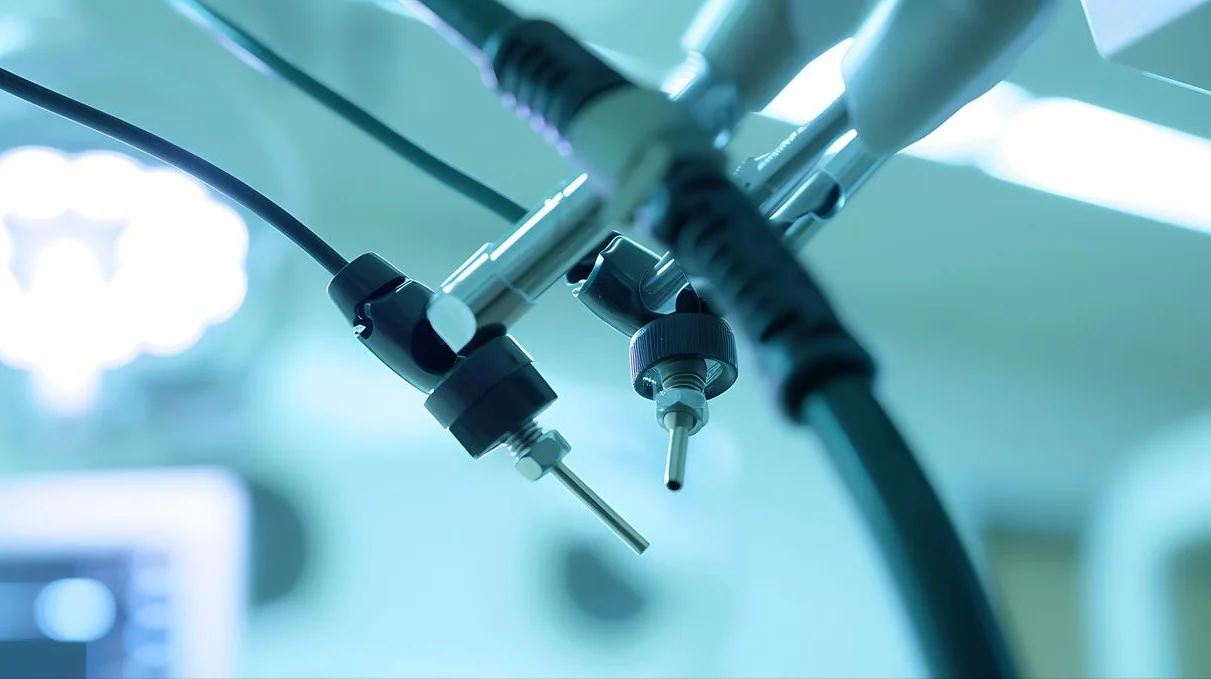
Medical device reverse engineering is the controlled process of reconstructing a validated CAD model from a physical medical component, then manufacturing a compliant replacement under an ISO 13485:2016 quality management system. Unlike general industrial reverse engineering, medical device projects require full lot traceability, biocompatibility documentation, and Device History Records (DHR). This guide outlines the workflow for reverse engineering and CNC machining of medical devices, from physical sample to ISO 13485-compliant replacement.
Why Medical Device Reverse Engineering Is Different
Medical devices are subject to strict regulatory requirements. A replacement part must not only fit and function — it must be documented, traceable, and manufactured under a certified quality system. Key differences from general reverse engineering:
Full lot traceability from raw material to finished part
Biocompatibility documentation for patient-contacting components
Device History Record (DHR) for every production batch
Cleanroom-compatible inspection and packaging where required
Non-Destructive Testing (NDT) for critical features
Without these, a replacement part cannot be legally or safely deployed in a medical device.
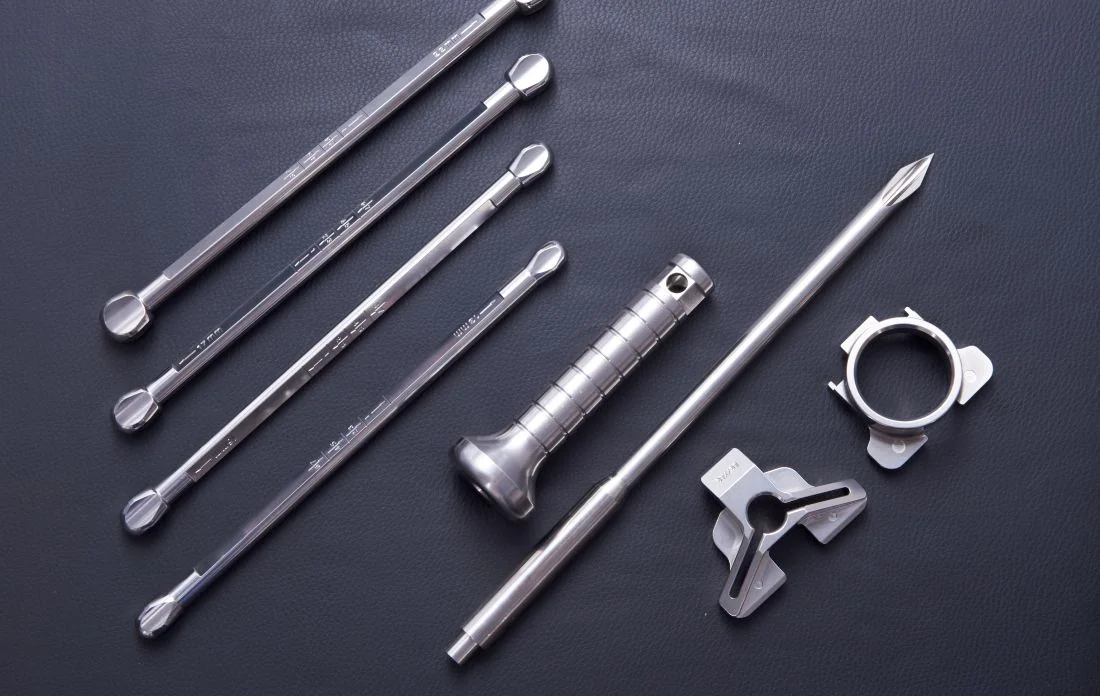
The 5-Step ISO 13485-Compliant Workflow
1
High-Density 3D Scanning and Point Cloud Capture
We capture the physical medical component — even if worn, damaged, or obsolete — using industrial blue-light 3D laser scanners.
Volumetric scanning accuracy: up to ±0.02 mm
Critical features: CMM-verified down to ±0.005 mm
Part size range: 5 mm to 1,500 mm
Output: Raw point cloud and STL mesh
2
Wear Compensation and Deviation Analysis
A worn surgical instrument or prosthetic component is not the original design. We perform wear compensation analysis to distinguish service-induced damage from the original geometry. Using deviation analysis (color mapping), we compare the point cloud against reconstructed nominal features. This step is critical for legacy medical devices that have been in service for years.
3
Parametric CAD Reconstruction and Design Intent Recovery
Our engineers rebuild the part as a fully editable, parametric CAD model, recovering the original design intent. We deliver native SolidWorks (.sldprt), Autodesk Inventor, and neutral STEP / IGES / Parasolid (.x_t) formats.
GD&T per ASME Y14.5 / ISO 1101
Functional tolerance allocation: critical fits ≤ 0.01 mm
Clean feature trees ready for CAM programming
4
CMM Inspection and Metrology Validation
Before batch machining, we machine a first article and validate it against the reconstructed CAD using bridge-type CMMs.
CMM inspection of critical dimensions and GD&T
3D deviation analysis against original scan data
Output: FAI report (AS9102 structure) and dimensional inspection report
DHR documentation initiated for the batch
5
CNC Machining and Full Quality Documentation
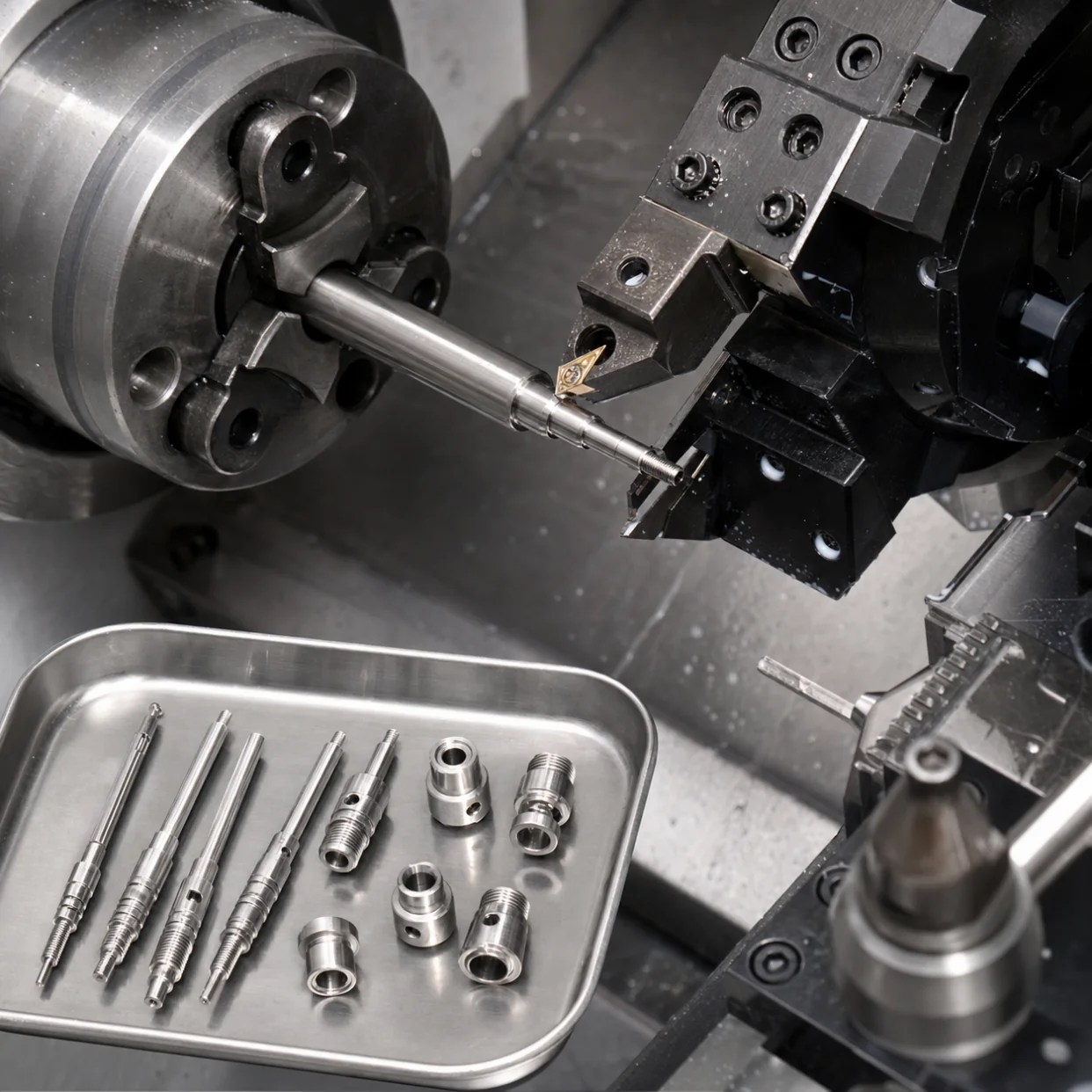
After first article approval, we machine the batch in medical-grade metals or engineering plastics.
Machining tolerances (ISO 2768): Metals ±0.05 mm (ISO 2768-f) / Plastics ±0.1 mm (ISO 2768-m) / 3D printing, vacuum casting, sheet metal ±0.2 mm
Surface finish: Ra 0.8 μm – Ra 3.2 μm
Documentation: CMM report, FAI (AS9102), Material Certification (MTR), and DHR
Delivery: DHL / FedEx worldwide
Comparison: Mechonus Medical Reverse Engineering vs. Traditional CNC Shops
| Feature | Mechonus Medical Reverse Engineering | Traditional CNC Shops |
|---|---|---|
| ISO 13485:2016 Certified | Yes. Medical QMS in place. | Usually not certified. |
| Drawing Required | No. Physical sample is sufficient. | Yes. CAD file or 2D drawing required. |
| Reverse Engineering | Included. 3D scanning + parametric CAD. | Not offered. |
| Wear Compensation | Yes. Distinguishes damage from original geometry. | No. Cannot machine worn parts. |
| DHR & Lot Traceability | Included. Full documentation. | Not available. |
| CMM Validation | Included. First article + batch inspection. | Optional, often not offered. |
| Lead Time | 2–4 weeks (e.g., custom surgical tool / retractor component: ~1 wk scanning-to-CAD + ~1 wk machining). | Weeks to months (if drawing exists). |
| MOQ | 1–500 pieces. Accept 1-piece prototype. | High MOQ. |
| Documentation | CMM Report + FAI (AS9102) + MTR + DHR. | Drawing only. |
Industry Applications
Surgical Instruments: Ergonomic redesign, worn instrument replication, and custom surgical tool fabrication.
Prosthetic Components: Custom prosthetic scanning, reverse engineering, and CNC machining.
Medical Device Enclosures: Obsolete enclosure replication, CAD reconstruction, and small-batch production.
Implant Tooling: Custom fixtures and tooling for implant manufacturing.
See our compressor impeller reverse engineering case study and slurry pump housing case study for related industrial examples.
FAQ
Can you reverse engineer a medical device component without drawings?
Yes, medical device components can be reverse engineered without original drawings using industrial 3D scanning and parametric CAD reconstruction under an ISO 13485 quality system. We then CNC machine the replacement. No original drawings are required.
How do you ensure regulatory compliance for medical device parts?
We provide full lot traceability, Device History Records (DHR), Material Certifications (MTR), and CMM inspection reports. Our quality system is certified to ISO 13485:2016, ensuring documentation meets medical device standards.
What is the typical lead time for a medical device reverse engineering project?
Standard lead time is 2–4 weeks from sample receipt to delivery, excluding international shipping and special process machining time. This includes 3D scanning (2–5 days), CAD reconstruction (3–7 days), first article machining and CMM inspection (5–10 days), and batch machining. Expedited service is available.
What materials can you machine for medical device components?
We machine medical-grade stainless steel (316L, 17-4 PH), titanium (Ti-6Al-4V), biocompatible plastics (PEEK, PTFE, PC), and other materials. Material selection can be matched to the original specification or optimized for your application.
Do you provide biocompatibility documentation?
Yes. For patient-contacting components, we provide Material Certifications (MTR) that confirm the raw material grade (e.g., ASTM F138 / F136). We can also assist in coordinating third-party ISO 10993 biocompatibility testing. Please specify your regulatory needs when requesting a quote.
Do you have a Minimum Order Quantity (MOQ) for medical device parts?
No strict MOQ. We accept 1-piece prototype orders. A small setup fee applies to cover programming and fixtures, waived on reorders after first article approval.
Regulatory & Compliance Disclaimer
Mechonus Precision Technology Co., Ltd. operates as a contract manufacturer under an ISO 13485:2016 certified quality management system. We provide reverse engineering, CNC machining, and documentation services (DHR, MTR, CMM, FAI) for medical device components. Final product regulatory submissions (e.g., FDA 510(k), CE MDR registration) and clinical validation remain the responsibility of the device owner or OEM. Mechonus does not hold regulatory approvals for finished medical devices.
Conclusion
Medical device reverse engineering is not a simple 3D scan. It is a controlled, ISO 13485-compliant engineering workflow that recovers design intent, validates tolerances, and delivers a fully documented replacement. Mechonus supports medical device manufacturers and healthcare providers worldwide with certified reverse engineering and CNC machining services. For related industrial applications, read our complete guide to reverse engineering obsolete industrial parts.